Monday, November 5, 2007

George Bush has always supported the dictator of Pakistan

A lot of people are astonished that the man who overthrew the Pakistani government in a coup 8 years ago might not actually believe in democracy.
US scolds Musharraf but smothers talk of aid cuts

US President George W Bush today urged Pakistan's Pervez Musharraf to lift a state of emergency, quit as army chief, and hold elections soon - but left unclear whether US aid hung in the balance.

Asked what he would do if Musharraf spurns such advice, Bush replied: "All we can do is continue to work with the president, as well as others in the Pak government, to make it abundantly clear the position of the United States."
Now why would anyone think George Bush was going to suspend aid?

Here were his views in 1999, a year before George Bush was elected, 2 years before 9/11 changed everything and 3 weeks after Pervaiz Musharraf overthrew the elected government.
"Can you name the general who is in charge of Pakistan?" Hiller asked, inquiring about Gen. Pervaiz Musharraf, who seized control of the country October 12.

Bush, in answering the question about the leader of Pakistan, also said: "The new Pakistani general, he's just been elected -- not elected, this guy took over office. It appears this guy is going to bring stability to the country and I think that's good news for the subcontinent."
Musharraf is a military dictator. Let's not act surprised when he acts like one.

Live Free or Die


Ron Paul's 4th quarter donor map. (States with the highest per capita donors are green) Image originally from Ron Paul Graphs.
On Monday, a group of Paul supporters helped raised more than $3.68 million in one day — more than half of what the campaign raised in the entire last quarter
Is it just me or does this map say a lot about the state of the Republican party today? Ron Paul's strongest support comes from the more independence minded Western states (plus New Hampshire) whose voters traditionally want the federal government to keep out of their business.

He does most poorly in the Bible belt.

It's undoubtedly a reflection of the fact that he's the only Republican running who can honestly claim to believe in small government and individual rights. Republicans have campaigned on libertarian ideas of personal freedom for decades, but the party that attempted to abolish habeas corpus, began covertly spying on the phone calls and daily lives of American citizens and declared that the president has extra legal powers during wartime has lost all claim to the libertarian vote.

Rudy Giuliani strives to be as corrupt as Bernie Kerik

Seriously, why is Ron Paul supposed to be the crazy one in the Republican field?


Mr. Giuliani said that he had erred in not thoroughly vetting Mr. Kerik, who is now under a federal investigation for accepting free renovations while he was working for Mr. Giuliani from a construction firm suspected of having links to organized crime. But Mr. Giuliani said that Mr. Kerik’s wrongdoing did not diminish what he had accomplished for the city.

“Sure, there were issues,” Mr. Giuliani added, “but if I have the same degree of success and failure as president of the United States, this country will be in great shape.”

Mr. Kerik is now facing a possible indictment on a range of federal felony charges, including perhaps tax evasion and bribery, stemming in part from his acceptance of $165,000 in renovations to his Bronx apartment paid for by the construction firm, Interstate Industrial. In June 2006, Mr. Kerik pleaded guilty in the Bronx to state misdemeanor charges relating to the same renovations.
Rudy Giuliani and Bernie Kerik image originally uploaded by fecke

Sunday, November 4, 2007

Do you really want to go there Rudy?

Rudy Giuliani, explaining why it's important to allow the police to bend the rules a bit:
MR. GIULIANI: Now, intensive questioning works. If I didn't use intensive questioning, there would be a lot of mafia guys running around New York right now and crime would be a lot higher in New York than it is. Intensive questioning has to be used. Torture should not be used. The line between the two is a difficult one.
First let's quit with the cute euphemisms for torture where simulated drowning becomes waterboarding becomes enhanced interrogation becomes intensive questioning.

Now what could he possibly be referring to? This?
Officers in Bronx Fire 41 Shots, And an Unarmed Man Is Killed

Four New York City police officers fire 41 shots at unarmed West African immigrant with no criminal record, killing him in doorway of his Bronx apartment building; it is unclear why police officers opened fire on man, Amadou Diallo, 22, who worked as street peddler in Manhattan;
Or this?
Mayor Asserts That Grand Jury Blamed Shooting Death on Victim

New York City Mayor Rudolph W Giuliani asserts to largely black audience in Crown Heights section of Brooklyn that grand jury had found that Patrick M Dorismond, the unarmed black man shot dead last March by the police, was responsible for his own death because of 'violent way he acted outside Manhattan bar'
Or this?
Giuliani Sneers, and Even Friends Bridle

Analysis of Mayor Rudolph W Giuliani's sarcastic response to final report of task force he created to examine relations between New York City's residents and Police Dept following beating and torture of Abner Louima in Brooklyn police station house; says Giuliani's dismissive attitude leaves open question of whether he ever intended to take panel's findings seriously, once he was re-elected; says even his supporters on panel could not mask their disappointment
Or this?
Police May Have Understated Street Searches, Spitzer Says

New York State Atty Gen Eliot L Spitzer says elite police unit that includes four officers who shot Amadou Diallo may have vastly underreported number of people it has stopped and searched on streets in last two years; Spitzer, whose office is investigating whether stop-and-frisk practices of Street Crime Unit have violated civil rights of minorities, says unit may have searched hundreds of thousands of people without finding any basis for arresting them
I'd have to guess this:
Giuliani Dismisses Police Proposals by His Task Force

Mayor Rudolph W Giuliani caustically dismisses most of recommendations of task force he appointed last summer to examine relations between New York City's residents and its Police Dept; says panel failed to recognize department's recent success in reducing crime; Giuliani makes no mention of impetus behind task force--beating and torture of Haitian immigrant Abner Louima in Brooklyn precinct station house; nor does he discuss any of panel's primary recommendations

Wednesday, October 31, 2007

Animation of the disappearing North Pole (2007)


The animation shows changing sea ice extent and concentration from 12 March to 24 September 2007. Credit U.S. National Ice Center (NIC) via the ESA

At the north pole, the area covered by ice reaches it's maximum in March. The minimum occurs in September. As the figure below shows, both the winter maximum and summer minimum have been dropping over the last 3 decades. In 2006 the maximum ice extent was the lowest on record. This year's summer melting was dramatic even when taking account of the long term trend.


Time series of the difference in ice extent in March (the month of ice-extent maximum) and September (the month of ice-extent minimum) from the mean values for the time period 1979-2007. Based on a least squares linear regression, the rate of decrease for the March and September ice extents was 2.8% per decade and 11.3% per decade, respectively. (image courtesy of NOAA)

Tuesday, October 30, 2007

Please stop helping


The bad idea that just refuses to die continues to gain support among the Washington elite, most recently in an article by ambassador Peter Galbraith, applauding Joe Biden's plan to divide Iraq into 3 parts.
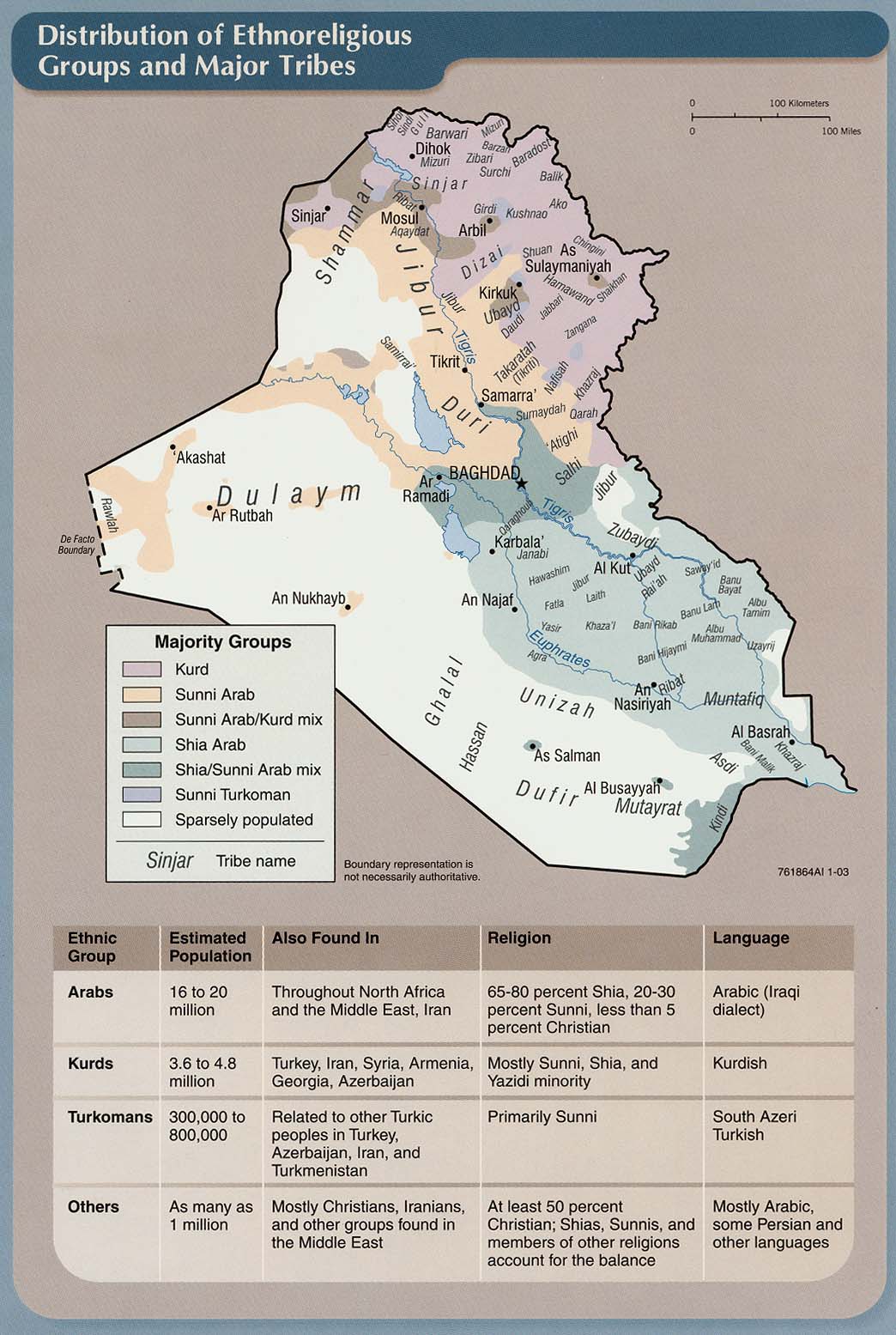
In a surge of realism, the Senate has voted 75-23 to acknowledge that Iraq has broken up and cannot be put back together. The measure, co-sponsored by Joe Biden, a Democratic presidential candidate, and Sam Brownback, Republican of Kansas, supports a plan for Iraq to become a loose confederation of three regions -- a Kurdish area in the north, a Shiite region in the south and a Sunni enclave in the center -- with the national government in Baghdad having few powers other than to manage the equitable distribution of oil revenues.
This is all a very nice attempt to fix Iraq, presented by many of the same people who got us into this mess in the first place. All despite the stated desires of a majority of Iraqis to keep the country united, not to mention our own claim to have handed over sovereignty more than 3 years ago.

Having originally ignored the warnings that a preemptive war might descend into chaos, our Senators now feel quite proud that they've learned the difference between the Sunni, the Shia and the Kurds. Surely, the best solution is to separate each party and let them control their respective regions.

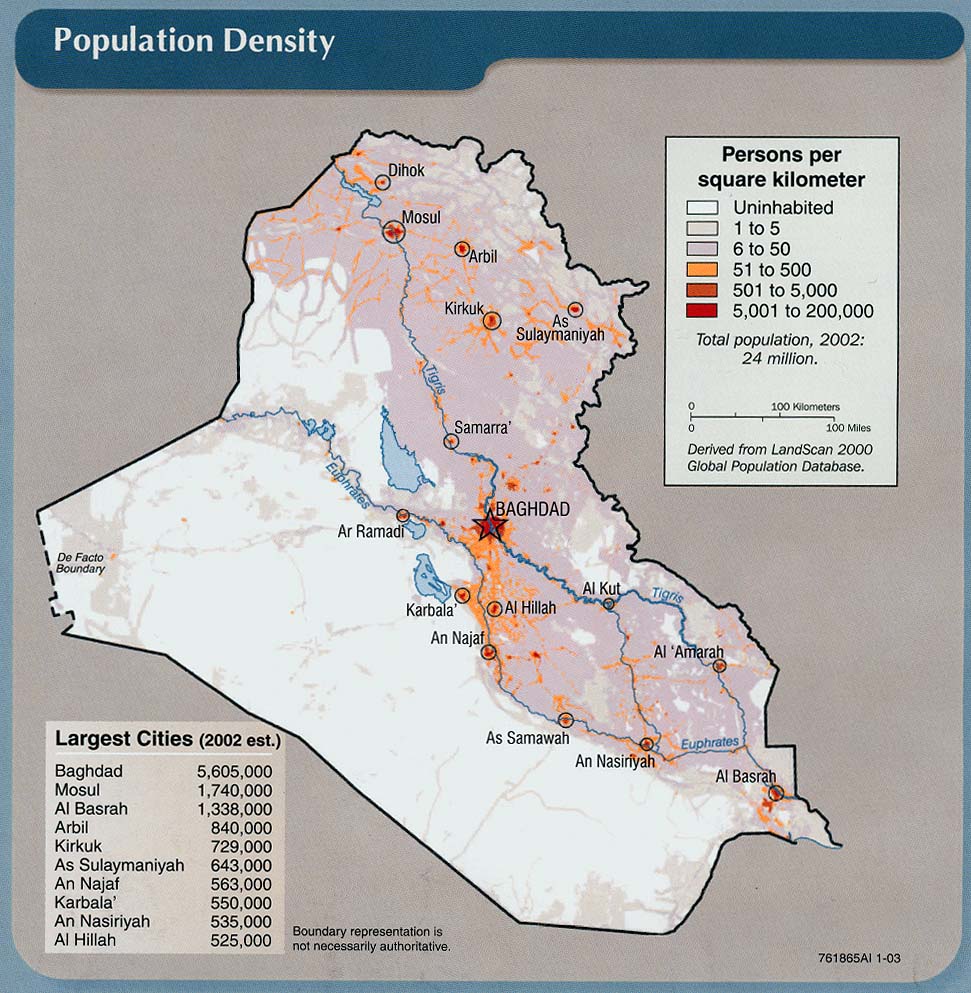
That is until you take a closer look at the map above and realize that the parties aren't as easy to separate as you might have hoped. The areas where the groups are mixed have names like Mosul, Arbil, Kirkuk, Sulayminiyah, Samara, Ramadi, and of course Baghdad. In other words, the places most of the people actually live.

Galbraith assures us that Iraq is unlikely to follow the Bosnian descent into ethnic cleansing and shrugs off the idea that the Turks might actually be serious about invading. But if you don't think the militias will do battle to seize control of the major cities then you haven't been paying attention.

Russ Feingold joined 22 Republicans opposing Biden's measure.
Barack Obama and John McCain were the only Senators not voting

Monday, October 29, 2007

Red State, Blue State? Its a rich thing.

There's been a bit of discussion about these maps showing how the 2004 presidential election vote would have been decided if only the poorest or wealthiest voters in each state had been counted.


But really, all the information is in these plots from the same study.

There is no red-blue divide among the poorest voters and little among middle class. It's a rich thing.


The wealthiest voters in the poorest states are hard-core Republicans, and there's a nearly linear correlation between the wealth of a state and the party affiliation of the wealthiest voters in that state. So for all the pundits and campaign managers trying to figure out the difference between salt-of-the-earth midwestern farmers and godless city-slickers, you're wasting your time with the wrong demographic.

Tuesday, October 23, 2007

California wildfires from orbit


Fires in Southern California, October 23, 2007. Image courtesy of NASA.
As of October 23, fires from the Mexican border to north of Los Angeles had burned more than 1,300 homes and forced more than half a million people from their homes, reported CNN. Windy weather pushed the flames through brush and grass dried from drought.

Putin isn't buying the Iranian threat

I suppose there's some logical consistency in insisting on building a defense that doesn't work to counter a threat that doesn't exist.
The proposed construction of a missile interceptor site in Poland and a radar station in the Czech Republic, ostensibly to target incoming Iranian ballistic missiles, has enraged Moscow, which believes the system could undermine Russia's nuclear deterrent.

The issue has contributed to the deepest chill in US-Russian relations since the cold war
Putin isn't buying the Iranian threat, and why would he? Iran has neither nuclear weapons, nor the missiles to deliver them:

A July report by the Congressional Research Service said that, as of mid-2007, "Iran has only flight-tested one medium-range missile, the single-stage Shahab-3, having a range of 1,300-2,000 kilometers," or about 1,200 miles. CRS also noted that many experts disagree with the U.S. assessment of Iran's capabilities.

"The international security policy and ballistic missile proliferation community argue that evidence of an Iranian ICBM program is scant and unconvincing," the CRS reported. Russian President Vladimir Putin has also expressed skepticism, and the Iranians said they dropped development of an ICBM, the CRS reported.

You might have thought they'd have done that a while ago

Iraq ordered the closure yesterday of the Kurdistan Workers’ Party (PKK) offices in the country as pressure mounted on the Government of Nouri al-Maliki to clamp down on the hardline Kurdish separatists.

“The PKK is a terrorist organisation and we have taken a decision to shut down their offices and not allow them to operate on Iraqi soil,” Mr al-Maliki said after talks with Ali Babacan, the Turkish Foreign Minister.

Sunday, October 21, 2007

Romney continues to dominate wherever votes are for sale


One dollar bill: image uploaded by Sami Keinänen

Following his victories in the non-scientific straw polls in Iowa and Illinois, Mitt Romney again proves that, when money is the object, he can squeak out a victory. In those events, the key was his campaign's ability to bus in supporters. In this one, the price was $1 and access to the internet:

Based on the smattering of applause that Mr. Romney got when his name was announced as the top vote getter, with 1,595 votes or 27.6 percent, it is safe to say that many in the hall were surprised that he won, surpassing Mr. Huckabee by 30 votes. The fact that Rep. Ron Paul, of Texas, finished third with 865 votes, or 15 percent, deepened the confusion. Fred D. Thompson finished fourth with 564 votes, or 9.8 percent.

Things shake up differently when looking at only the votes that were made by those on-site. Of 952 votes cast on-site, Mr. Huckabee received 488, or 51 percent, a virtual runaway in such a crowded field. Mr. Romney had only 99 votes, or 10.4 percent;

Saturday, October 20, 2007

Pot attacks Kettle during "Values" summit

This attack might work for Huckabee or even Tancredo. But Giuliani?
Highlighting the significance of the gathering in potentially reshaping the Republican race, the one major candidate who did not speak on Friday, Rudolph W. Giuliani, made sure he was heard. In an e-mail message to reporters, his campaign went after Mr. Romney for what it called “identical stances” Mr. Romney shared in the past with Mayor Rudy Giuliani... Senator Hillary Rodham Clinton of New York, including defense of abortion rights and criticism of the National Rifle Association.

Friday, October 19, 2007

Legitimacy

Scott Lemieux at Tapped makes a common error while calling for the Senate to reject Michael Mukasey's nomination for Attorney General:

It's true that the Senate vote is virtually all about symbolism at this point -- someone has to serve in the office, and nobody Bush appoints is going to be good -- but in this case the symbolism matters.

Confirming a nominee is about much more than just filling an open position. Confirmation implies legitimacy. This reverberates throughout the entire Justice department. The lawyers he hires, the interpretation of the law he pursues even the cases he prosecutes are affected by his standing with the people.

There's nothing symbolic about demanding that a nominee believe in the rule of law and emphatically renounce torture. Alberto Gonzales would never have been confirmed in the first place if the Senate had demanded those simple standards. Instead, 6 Democrats voted along with 54 Republicans to give him a Congressional seal of approval.

Gonzales was able to run roughshod over Justice because he was confirmed by a Senate that knew he condoned torture and believed in a unitary executive. He was forced out when he lost the faith of those same Senators

A recess appointee would never have had the clout to act so egregiously.

Precedents matter in this country. Regardless of whether George Bush ever nominates a qualified AG, future presidents should be on notice that they can't simply nominate anybody to the highest offices in government.

Chris Dodd draws a line in the sand

image courtesy of the National Archives

Amendment IV

The right of the people to be secure in their persons, houses, papers, and effects, against unreasonable searches and seizures, shall not be violated, and no warrants shall issue, but upon probable cause, supported by oath or affirmation, and particularly describing the place to be searched, and the persons or things to be seized.


(Below are Chrid Dodd's statements against granting immunity to telecom companies who abetted George Bush's warrentless surveillance of U.S. citizens in violation of the FISA law)
By granting immunity to telecommunications companies that participated in the President’s terrorist surveillance program, even though such participation may have been illegal, the FISA reform bill sets a dangerous precedent by giving the President sweeping authorization to neglect the right to privacy that Americans are entitled to under the Constitution.

“The President has no right to secretly eavesdrop on the conversations and activities of law abiding American citizens and anyone who has aided and abetted him in these illegal activities should be held accountable,” said Dodd. “It is unconscionable that such a basic right has been violated, and that the President is the perpetrator. I will do everything in my power to stop Congress from shielding this President’s agenda of secrecy, deception, and blatant unlawfulness.”

"While the President may think that it's right to offer immunity to those who break the law and violate the right to privacy of thousands of law-abiding Americans, I want to assure him it is not a value we have in common and I hope the same can be said of my fellow Democrats in the Senate.

"For too long we have failed to respect the rule of law and failed to protect our fundamental civil liberties. I will do what I can to see to it that no telecommunications giant that was complicit in this Administration's assault on the Constitution is given a get-out-of-jail-free card."

Update: Washington Post reporter, Rita Skeeter, worries that Dodd will lose precious campaign time by doing his job:
Whenever that big day comes, Dodd -- as the keeper of the "hold" -- must return from the campaign trail to officially block debate on the bill. That entails standing around on the Senate floor, forcing procedural votes, avoiding the furious glares of colleagues who don't share the same concerns. The standard duration of such showdowns is about a week -- time that Dodd, who is trailing badly in early primary polls, can scarcely afford.


Uvs Nuur Basin, Mongolia. Image courtesy of NASA.
Far from a moderating ocean, the Uvs Nuur Basin has an extreme climate with temperatures that swing from a low of -58 degrees Celsius (-72 Fahrenheit) during the winter up to 40 Celsius (104 Fahrenheit) in the summer. Containing a number of ecosystems in its fresh and salt water lakes, deserts, mountains, grasslands, and forests, the basin provides an important habitat for a variety of animals ranging from the endangered snow leopard to the white-tailed sea eagle. Because of its diversity and the relatively low amount of human impact on the area, the basin is a United Nations World Heritage Site.

Thursday, October 18, 2007

Hillary Clinton on the "forgotten front"

The forgotten frontline in the war on terror is Afghanistan, where our military effort must be reinforced. The Taliban cannot be allowed to regain power in Afghanistan; if they return, al Qaeda will return with them. Yet current U.S. policies have actually weakened President Hamid Karzai's government and allowed the Taliban to retake many areas, especially in the south. A largely unimpeded heroin trade finances the very Taliban fighters and al Qaeda terrorists who are attacking our troops. In addition to engaging in counternarcotics efforts, we must seek to dry up recruiting opportunities for the Taliban by funding crop-substitution programs, a large-scale road-building initiative, institutions that train and prepare Afghans for honest and effective governance, and programs to enable women to play a larger role in society.

Thursday, October 11, 2007

Turkey is on the verge of invading Iraq

In an apparent attempt to get the U.S. to act against Kurdish separatists using northern Iraq as a safe haven, Prime Minister Erdogan is requesting authorization from his parliament to invade.
Erdogan suggested Turkey may not take immediate action but may rather wait to see if the US and the Iraqis crack down on the PKK bases in northern Iraq. "If you're against it, make your attitude clear and do whatever is necessary," the prime minister said. "If you cannot do it, then let us do it."

Pressure has mounted on Erdogan this week after 15 soldiers were killed over the weekend in the mainly Kurdish southeast of Turkey. The bloodshed continued on Wednesday -- one policeman was killed and several people were injured when a bomb was thrown into a tailor's shop in Diyarbakir, the largest city in Turkey's southeast.
There's little doubt that if the Americans don't act, Turkey will send it's army across the border. This would unfortunately spoil the president's attempt to portray the Kurdish north as an Iraqi success story. It's not obvious which side the Americans would end up fighting for, but considering his own saber rattling against states giving aid and shelter to terrorists, you might think he'd have acted on this years ago.

The PKK is designated as a foreign terrorist organization by the U.S. State Department.

Monday, October 8, 2007

It's the war, stupid!


A lot of virtual ink is being wasted interpreting this image from Professor Pollkatz's site, purporting to show a correlation between the price of gasoline and President Bush's poll numbers. This despite the best efforts of others to debunk the claim.

At first glance it looks pretty impressive with both time series showing a sharp jump after 9/11 followed by a fairly long decline. Chris Bowers goes so far as to conclude that rising gas prices helped helped Democrats win power in 2006 and warns that the longterm trend spells doom for future presidents.
Ending the war will help, and providing millions of people with health care will help, too. However, gas prices will still remain high, making approval ratings in the 40s and 50s about the best anyone can do even under the most favorable conditions until at least 2020.

In two words this is complete nonsense.

If you look at the Bush's popularity figures it's dominated by 3 events - 9/11, the invasion of Iraq and the capture of Saddam. After each event he saw an immediate jump in approval followed by a nearly linear drop back to the norm. I don't think anyone can seriously argue the price of gas dominated his poll ratings during that time.

The fact that neither the sharpest drop in gas prices (in the weeks after 9/11), nor the sharpest increase a few months later had any obvious impact on George Bush's poll numbers is a pretty good clue that the gas theory is full of hot air.

That brings us to about January of 2004. So cover up the left half of pollkatz's chart. Still see a trend?

Want to know what has an even better correlation with George Bush's approval ratings than the price of gas? It's exactly what people keep telling you it is:


Pollkatz's Bush approval index in red. Polling Report's "Do you think the war with Iraq was worth fighting?" in blue.

Sunday, October 7, 2007

Not so arbitrary timelines

What would prompt our leaders to pull troops from the frontlines of the war for civilization? Apparently the prospect of having to pay them benefits under the GI Bill:
Anderson's orders, and the orders of 1,161 other Minnesota guard members, were written for 729 days.

Had they been written for 730 days, just one day more, the soldiers would receive those benefits to pay for school.
Anyone suggesting this was done deliberately is due for a nasty letter from our esteemed Senate.


h/t John Cole

Tuesday, October 2, 2007

Why is the cost of the Iraq war rising year after year?

Because politicians pretend that wars are free.

“Just as I have opposed the war from the outset, I am opposed to a draft and I am opposed to a war surtax,” Pelosi said in a statement issued this afternoon.

Funny thing, though, you've actually been sending war budgets up for a vote.

To date we've spent nearly half a trillion dollars on the Iraq war alone. The dirty little secret is that we haven't actually paid for it yet. Those bills are going to come due whether you call it a war surtax or not.

Democrats had the opportunity to make the president decide between his two favorite causes: the Iraq war and "tax cuts so help me God". Instead we get Congresswoman Pelosi declaring that she doesn't believe in a war tax and Bush gets his funding without any obligation to actually pay for it.

So then annual war spending jumps from $50 billion to $75 billion to $85 billion to $100 billion to $130 billion to $160 billion, because everyone pretends the money isn't real.

As long as Congress keeps rubber stamping George Bush's war requests, they at least need to find a way to pay for it.

h/t John Cole

Sunday, September 30, 2007

Increased melting of the Antarctic Ice Cap


Melting at the South Pole. Image courtesy of NASA

Just as the North Pole has had record ice loss in recent years, the South Pole is also showing the evidence of rising global temperatures:

The top map shows how the area affected by persistent melting has expanded since 1987. The colors represent the first year in which satellites observed persistent melting. Light green shows areas where melting was observed from the beginning, while blue shows areas where melting occurred for the first time more recently.

The bottom map shows the number of days on which melting occurred in 2005, a year of particularly dramatic melting. Snow melted as far inland as 500 miles and at altitudes of 1.2 miles above sea level.

$9.11, $9.11, $9.11

Just a slightly updated version of Rudy's original campaign theme.

Republicans and taxes


"got a ticket" image uploaded to by isado

Chris Wallace actually made a good point with a question to Mitt Romney in the Fox news debate.

MR. WALLACE: Governor Romney, you have taken the pledge [not to raise tax rates]. You like to say that you don’t just talk about budgets, but in fact you actually had to operate one as governor of Massachusetts. But according to the National Conference of State Legislatures, in your first year as governor you raised fees and fines by half a billion dollars, including fees paid by the blind, by gun owners, by those seeking training against domestic violence and even by used car shoppers. In fact, the Associated Press says you earned a nickname back then in Massachusetts, it was FeFe. (Laughter.)

How do you respond, sir?

MR. ROMNEY: Well, that’s the first time I’ve heard that, Chris, but it’s pretty good. As a matter of fact, a little exaggeration. The total fees raised were $260 million, and that’s a big number. We had a $3 billion budget gap. The Democrats -- you probably know that Massachusetts is a bit of a Democratic state -- the Democrats wanted to raise taxes, I said no way. And in fact, we did not raise taxes on our citizens, and we lowered them across the state time and again.
When politicians sign the "no new taxes" oath, you need to pay attention to the fine print. Fines, penalties, tolls and fees: these are the ways they prefer to fund the government.

Sunday, September 23, 2007

97 Senators vote to censure criticism of the military

in two amendments, one sponsored by Democrat Barbara Boxer, the other by Republican John Cornyn.

Russ Feingold was the only Senator voting against both amendments.

46 Republicans thought it was perfectly acceptable to attack veterans like Max Cleland and John Kerry, but outrageous to attack the credibility of General Petraeus.

22 Democrats and Independent Joe Lieberman felt it was reprehensible to ever criticize members of the military.

Joe Biden and Maria Cantwell didn't vote on either measure.


(For comparison, only 5 Senators were willing to go on the record censuring the President for violating the law by spying on Americans without a warrant.)

Thursday, September 20, 2007

What did I do with all those Canadian quarters anyway?

The price of a U.S. dollar in Canadian dollars.

Holy frack! Now the Canadians are going to start making fun of our money.
The Canadian dollar rose as high as $1.0008, before retreating to 99.87 U.S. cents at 4:16 p.m. in New York. It has soared 62 percent from a record low of 61.76 U.S. cents in 2002. The U.S. dollar fell as low as 99.93 Canadian cents today. The Canadian currency last closed above $1 on Nov. 25, 1976, when Pierre Trudeau was Canada's prime minister.
When George Bush became president the U.S. dollar was worth about $1.50 Canadian.

Wednesday, September 19, 2007

Northwest passage open. Northeast passage nearly open


Satellite mosaic of the polar ice cap during September 2007. Image courtesy ESA

The most direct route of the Northwest Passage (highlighted in the top mosaic by an orange line) across northern Canada is shown fully navigable, while the Northeast Passage (blue line) along the Siberian coast remains only partially blocked. To date, the Northwest Passage has been predicted to remain closed even during reduced ice cover by multi-year ice pack – sea ice that survives one or more summers. However, according to Pedersen, this year’s extreme event has shown the passage may well open sooner than expected.

The call of the moderate Republican

“I endorsed it,” Mr. Warner said of the Webb proposal. “I intend now to cast a vote against it.”

Webb's amendment would have required the military to grant soldiers as much time at home as they spent overseas. The vote to end debate garnered 56 votes in the Senate. A majority, but short of the 60 needed to overcome Mitch McConnell's filibuster.

40 Republicans and Independent Joe Lieberman voted against cloture.

Republicans Norm Coleman, Susan Collins, Chuck Hagel, Gordon Smith, Olympia Snowe, and John Sununu broke with their party.

Let's hope John Warner finds his lost self-respect in retirement.

How about just giving Iraq an effective legal system?

Another reason to oppose arbitrary, indefinite detention of suspects without trial:

The effort to reshape attitudes among the growing detainee population is aimed at addressing a problem that has vexed U.S. troops in Iraq for the past four years: Military detention facilities have served as breeding grounds for extremist views, transforming some prisoners into hard-core insurgents, according to military analysts.
We want the guilty in jail, and the innocent out. Consider that while we debate the restoration of habeas corpus to our legal system.

Monday, September 17, 2007

Russ Feingold calls for an end to the military mission in Iraq

Senator Feingold plans to use the Defense authorization bill to end the Iraq war:
“Last night, we heard the President tell the nation that he intends to keep a large number of U.S. troops bogged down in Iraq indefinitely, while Al Qaeda continues to strengthen and regenerate in Afghanistan and Pakistan,” Feingold said. “While many Democrats and Republicans have acknowledged the President’s strategy is the wrong approach, Congress has so far failed to take strong action to end it. Congress must use its power to end this misguided policy – a policy which has stretched our military to the breaking point, hobbled our ability to go after those who attacked us on 9/11, and endangered our national security.”

Time for Congress to end this

John Edwards:

"Has there been serious progress to a political solution?"

"The answer to that is no," he said in answering his own question.

Edwards said, as he's done in the past, that Congress should pass the next Iraq spending bill only with a timetable for withdrawal attached. And if Bush should veto that legislation, Congress should keep re-submitting the same bill. "It is time for the Congress to end this," he said. "It's time for the Congress to stand its ground."


Chris Dodd:

"Rather than picking up votes, by removing the deadline to get our troops out of Iraq you have lost this Democrat's vote.

"Despite the fact that this has been the bloodiest summer of the war and report after report says that there has been little to no political progress, the White House continues to argue that their strategy is working.

"It is clear that half measures are not going to stop this President or end this war.

"I cannot and will not support any measure that does not have a firm and enforceable deadline to complete the redeployment of combat troops from Iraq. Only then will Congress be able to send a clear message to the President that we are changing course in Iraq, and a message to the Iraqis that they need to get their political house in order.


Barack Obama:

"There is an eerie echo to the President's words today. Five years ago, he made a misleading case to the American people that the trail to al Qaeda and Osama bin Laden somehow led through Iraq, and too many in Washington followed without asking the hard questions that should have been raised. Now we are dealing with the consequences of that failure of candor and judgment, and the President is using the politics of fear to continue a wrong-headed policy. It's time to turn the page on the failed Bush-Cheney strategy and conventional Washington thinking, remove our combat troops from Iraq, mount a long overdue surge of diplomacy, and focus our attention on a resurgent al Qaeda in Afghanistan and Pakistan."

Sunday, September 16, 2007

Irrational behavior and the Iraq war

For those of you wondering why Congress and the President can't end the disaster that is the Iraq war; I think the best explanation is right here:
The problem surfaces when the bidders get up close to a dollar. After 99 cents the last vestige of profitability disappears, but the bidding continues between the two highest players. They now realize that they stand to lose no matter what, but that they can still buffer their losses by winning the dollar. They just have to outlast the other player. Following this strategy, the two hapless students usually run the bid up several dollars, turning the apparent shot at easy money into a ghastly battle of spiraling disaster.

Theoretically, there is no stable outcome once the dynamic gets going. The only clear limit is the exhaustion of one of the player's total funds. In the classroom, the auction generally ends with the grudging decision of one player to "irrationally" accept the larger loss and get out of the terrible spiral. Economists call the dollar auction pattern an irrational escalation of commitment. We might also call it the war in Iraq.
This is why war supporters always complain about their critics "looking backwards". It doesn't matter that the Iraq war has become more expensive than it was ever worth. All that matters is that we might end up in a situation that's slightly better than the one we are in today.
h/t Andrew Sullivan

Mitt Romney attacks his home state

There's an old saying that goes, "you dance with the one who brung ya". Mitt Romney doesn't subscribe to that creed. He routinely ridicules the people who elected him Governor, and talks about his 4 years in office as though he had staged a one-man battle against the forces of darkness.
"Coming from Massachusetts, I saw first hand the liberal future, and it doesn't work. That's why I ran against Ted Kennedy. Liberal social programs weren't solving poverty; they were in fact creating a culture of poverty. I didn't win, but at least Teddy had to take out a mortgage on his home to beat me.

"Massachusetts became center stage for the liberal social agenda - sort of San Francisco east, Nancy Pelosi style.

"Ten months into my term, the Massachusetts Supreme Judicial Court said our Constitution requires gay marriage. John Adams, who wrote it, would be surprised.
Massachusetts, for the record, has one of the lowest rates of poverty in the nation (and has for decades).

It also has the lowest divorce rate, not that that has anything to do with gay marriage.

And how did Romney attempt to stop the liberal hordes from destroying his state? Did he marshal bills through the State House? Did he rally like-minded citizens against the extremists? Did he use his phenomenal leadership skills to turn the tide in his favor?

No.
"I vetoed bills, and filed new bills. I enforced a law that banned out-of-state same sex couples from coming to Massachusetts to get married. I went to the court again and again, I testified before Congress for the federal marriage amendment, and I championed our successful drive that collected 170,000 signatures for a citizen ballot initiative to protect marriage.
Sadly for Romney, most of his vetos were overriden, he failed in his appeals to the courts and he was ultimately replaced by a pro gay-marriage, liberal Democrat.

Saturday, September 15, 2007


Sea Ice extent as of August 22, 2007. Image courtesy of NASA.

If your life's goal is standing at the North Pole, you'd better book your tickets now.

If the increased rate of melting continues, the summertime Arctic could be totally free of ice by 2030.

Mark Serreze, an Arctic specialist at the US National Snow and Ice Data Centre at Colorado University in Denver, said: "It's amazing. It's simply fallen off a cliff and we're still losing ice."

The Arctic has now lost about a third of its ice since satellite measurements began thirty years ago, and the rate of loss has accelerated sharply since 2002.

Dr Serreze said: "If you asked me a couple of years ago when the Arctic could lose all of its ice then I would have said 2100, or 2070 maybe. But now I think that 2030 is a reasonable estimate. It seems that the Arctic is going to be a very different place within our lifetimes, and certainly within our childrens' lifetimes."


On the up side, you can now sail the Northwest Passage. The National Snow and Ice Data Center has the details:

Another notable aspect of August 2007 was the opening of the Northwest Passage. During August 2007, the passage was the most navigable that people have seen since monitoring began. The Northeast Passage, along the Russian coast, is still blocked by fairly heavy ice conditions north of the Taymyr Peninsula.

Might the Northeast Passage open in the next few weeks? We will be monitoring the situation.

Alan Keyes (2004): on the brilliance of the Iraq war

We attacked Iraq because it was easy. North Korea and Iran might have fought back.

From the 2004 Illinois Senate debate:
MODERATOR: Let's talk about some of the decisions that might have to be made. There may not be any weapons of mass destruction in Iraq, but there are such weapons in Iran, there are such weapons in North Korea. Ambassador Keyes, how strongly would you consider preemptive action against those nations?

KEYES: Well, all such decisions--and that's what I thought was one of the brilliant things about the Iraq decision--is that you go after those things that are most susceptible to the right kinds of action. Iraq was susceptible to direct military action, and so the President acted. If you're talking about North Korea, you have to look at the entire context in which we deal with the North Korean threat. And that includes relationships with the Chinese and the possibility that you're talking about something that could escalate into a larger war. We also have mechanisms preexisting for bringing international pressure to bear on both the North Koreans and the Iranians, when it comes to proliferation of weapons of mass destruction, particularly nuclear weapons.

This basically falls into the "suck on this" school of foreign policy advocated by Tom Friedman.

Monday, September 10, 2007

bin Laden "virtually impotent" since 2002

Once again the Bush brigade is mocking the man they're incapable of finding.

The Taliban fled for the hills. Bin Laden, it seemed, would be cornered. Indeed, on Dec. 15, CIA operatives listening on a captured jihadist radio could hear bin Laden himself say "Forgive me" to his followers, pinned down in their mountain caves near Tora Bora.

As it happened, however, the hunt for bin Laden was unraveling on the very same day. As recalled by Gary Berntsen, the CIA officer in charge of the covert team working with the Northern Alliance, code-named Jawbreaker, the military refused his pleas for 800 Army Rangers to cut off bin Laden's escape. Maj. Gen. Dell Dailey, the Special Ops commander sent out by Central Command, told Berntsen he was doing an "excellent job," but that putting in ground troops might offend America's Afghan allies.

They've been making the claim that bin Laden is irrelevant ever since.

"Everybody wants to know where Osama bin Laden is. The next question is, who cares?" says one Defense Department official, reflecting an attitude widespread in Pentagon corridors.

Since that quote was made (in 2002), the impotent man has been involved in terrorist attacks against Tunisia, Bali, Mombasa, Casablanca, Istanbul, Egypt, London and Madrid and members of his organization have been intercepted planning attacks in Denmark, Scotland and Germany.

Maybe president Bush should be more concerned about his own inadequacy.

Friday, September 7, 2007

Duncan Hunter on the perks of Guantanamo

REP. HUNTER: Those guys get taxpayer-paid-for prayer rugs. They have prayer five times a day. They’ve all gained weight. The last time I looked at the menu, they had honey-glazed chicken and rice pilaf on Friday. That’s how we treat the terrorists.

They’ve got health care that’s better than most HMOs, and they’ve got something else that no Democrat politician in America has. They live in a place called Guantanamo where not one person has ever been murdered. And there’s not one politician, one Democrat politician in America, that can say that about one of the prisons in his home district.

We got to keep Guantanamo open.

And all you need to do to get all that is get yourself declared an enemy combatant. No wonder terrorist recruitment is up.

Democratic majority suicide watch

In an absurdly titled article in the New York Times we learn that the Democrats are preparing to cave, yet again, before the fight even begins.
Democrats Newly Willing to Compromise on Iraq

With a mixed picture emerging about progress in Iraq, Senate Democratic leaders are showing a new openness to compromise as they try to attract Republican support for forcing at least modest troop withdrawals in the coming months.

This is the same group of Senate Democrats who voted 36-11 to rubber stamp George Bush's $120 billion emergency supplemental request last May.

16 of them later voted to legalize the secret NSA domestic spying program. The one that was judged an unconstitutional violation of the 4th amendment last August.

One wonders what more they could do in the name of compromise.
Democrats had been counting on more Republicans to make a clean break from the president after the summer recess, but the White House has managed, at least temporarily, to hold on to much of its support.
After explicitly telling the president that he merely needs to veto legislation to get his way, and showing the minority leader that he can pass his own bill by filibustering theirs; the Democrats thought the Republicans would now cooperate? This is the sort of political acumen that has led to a 20 point drop in their approval rating since January.

Some Democrats have concluded that their decision earlier this summer to thwart votes on alternatives left them open to criticism that they were being intransigent. Democrats had wanted to keep pressure on Republicans over the summer by denying them votes on Iraq. Now, with the recess over, Democratic leaders are more willing to allow alternatives to a hard withdrawal date to reach the floor to keep pressure on President Bush.

Mr. Levin and other Democrats said this week that they were reaching out to Republicans who had expressed reservations about Mr. Bush’s policy to generate momentum for a proposal by Senator John W. Warner, Republican of Virginia, to begin to remove at least a limited number of troops from Iraq by the end of the year.
Harry Reid has demonstrated that he simply doesn't know how to lead the Senate. Instead of pushing a Democratic Iraq strategy, he begins negotiations by starting with Republican John Warner's. (Warner's plan is to ask nicely if the president would please send a few troops home for Christmas.)

Democrats won in 2006 because a majority of Americans had tired of an ineffectual rubber stamp Republican Congress and their support for the war plan of the most incompetent president in American history. Democrats were elected to change course, not whine. They cannot wait for Republican conversions. They have the power of the purse and the power to block the president's agenda, but they need to actually use it. If they smack their supporters again they can kiss the Senate goodbye in 2008.

Keep your eye on the ball, Harry. Three strikes and you're out.

Politically correct speech: Republican version

Be careful with your use of adverbs:
SEN. MCCAIN: Governor, the surge is working. The surge is working, sir. It is working.

MR. ROMNEY: That’s just what I said.

SEN. MCCAIN: No, not apparently -- it’s working.

Sam Brownback: partition Iraq

Sam Brownback reiterates his strategy to split Iraq into 3 parts along ethnic lines:

SEN. BROWNBACK: We ought to now push for establishment of a Sunni state in the west, still one country, still one country, but separate states. That’s a political solution -- that you can take advantage of what the military has done on the ground. That’s what we need to do to move forward now.

MR. GOLER: Senator, let me ask you, quickly, if you do that kind of loose federation, how do you keep the Kurds in the north from fighting with Turkey, how do you keep the Shi’a from allying with Iran, and how do you keep the Sunnis from rebelling over having no oil resources?

SEN. BROWNBACK: How do you do it now? I mean, I think you’re going to need a long-term U.S. presence in, I think, particularly in the Kurdish region in the north and the Sunni region in the west, that you’re going to have a long-term -- invited by those governments, and you’re going to need it to assure the Turks that the Kurds aren’t going to pull out and to assure the Kurds that the Turks aren’t going to come in. I think that’s what you have to do in looking at the reality.
Brownback's plan, shared by Democratic candidate Joe Biden, addresses the ethnic component of Iraq's civil war, but ignores the fact that there are more than 3 factions in Iraq and they don't all break along simple ethnic lines. The violence in Shiite dominated Basra is evidence that even when an area has become ethnically purified, the battle for power rages on.

Fox host accuses Ron Paul of taking orders from al Qaeda

MR. WALLACE: Congressman Paul, your position on the war is pretty simple: Get out. What about, though, trying to minimize the bloodbath that would certainly occur if we pull out in a hurry? What about protecting the thousands of Iraqis who have staked their lives in backing the U.S.? And would you leave troops in the region to take out any al Qaeda camps that are developed after we leave?

REP. PAUL:
The people who say there will be a bloodbath are the ones who said it would be a cakewalk, it would be slam dunk, and that it would be paid for by oil. Why believe them? They’ve been wrong on everything they’ve said. Why not ask the people -- (interrupted by cheers) -- why not ask the people who advise not to go into the region and into the war? The war has not gone well one bit.

Yes, I would leave, I would leave completely. Why leave the troops in the region? The fact that we had troops in Saudi Arabia was one of the three reasons given for the attack on 9/11. So why leave them in the region? They don’t want our troops on the Arabian Peninsula. We have no need for our national security to have troops on the Arabian Peninsula, and going into Iraq and Afghanistan and threatening Iran is the worst thing we can do for our national security.

I am less safe, the American people are less safe for this. It’s the policy that is wrong. Tactical movements and shifting troops around and taking in 30 more and reducing by five, totally irrelevant. We need a new foreign policy that said we ought to mind our own business, bring our troops home, defend this country, defend -- (bell sounds) -- our borders --

MR. WALLACE: So, Congressman Paul, you’re basically saying that we should take our marching orders from al Qaeda? If they want us off the Arabian Peninsula, we should leave? (Laughter.)

REP. PAUL: No! (Cheers, applause.) I’m saying -- (laughter) -- I’m saying we should take our marching orders from our Constitution. We should not go to war -- (cheers, applause) -- we should not go to war without a declaration. We should not go to war when it’s an aggressive war. This is an aggressive invasion. We’ve committed the invasion of this war, and it’s illegal under international law. That’s where I take my marching orders, not from any enemy. (Cheers, boos.)

Rudy Giuliani on gun control

You have a 2nd amendment right to own a gun. Unless the state says that you don't:

MR. GIULIANI: I think states have a right to decide that. I mean, states have an right to decide their gun laws. The 2nd Amendment grants you the right to bear arms.

We have a federal system. A lot of these issues work in America, where we have people of different views and different conscience, because we are a federal system. We allow states to make different decisions.

Of course a Constitutional right that can be rescinded by the state is no right at all.

Mitt Romney on "sanctuary cities"

Governors aren't responsible for the actions of their mayors. But as president, I would be:

MR. WALLACE: Governor Romney, in recent weeks, you have gone after Mayor Giuliani for running what you say was a sanctuary city for illegals. But as governor of Massachusetts, you did nothing to stop Cambridge, Somerville or Orleans, all of which proclaim themselves to be sanctuaries.

MR. ROMNEY: [W]ith regards to sanctuary cities, the governors aren’t responsible for mayors who are not following the law. And actually in my case, I -- as soon as I learned about it, a program in the department of -- of ICE, that we could have our state police authorized to enforce the law, I did just that, so that in sanctuary cities in our state and non-sanctuary cities, the law would be enforced.

But this is a place where Mayor Giuliani and I just simply disagree.

I think we should reduce federal funding to cities that call themselves sanctuary cities. I think saying, as he did, if you happen to be an undocumented alien, we want you in New York, we’ll protect you in New York -- I think that contributed to 3 million illegals in this country becoming 12 million illegals coming into this country.

Sanctuary cities are those which ban city employees from asking a person about their residency status or contacting the INS when discovering an illegal alien. The argument being that illegal immigrants won't report crimes or seek medical care if they feared being deported.

Enforcement of immigration laws is typically the purview of the federal government, not the states. In 2006 Congress passed a provision which authorized state and local officials to identify and detain illegal immigrants. Rudy Giuliani left office at the end of 2001.

Thursday, September 6, 2007

Fighting in Basra doesn't count

Apparently, it's not a civil war if the parties involved aren't religiously or ethnically distinct.

Among the most worrisome trends cited by the NIE was escalating warfare between rival Shiite militias in southern Iraq that has consumed the port city of Basra and resulted last month in the assassination of two southern provincial governors. According to a spokesman for the Baghdad headquarters of the Multi-National Force-Iraq (MNF-I), those attacks are not included in the military's statistics. "Given a lack of capability to accurately track Shiite-on-Shiite and Sunni-on-Sunni violence, except in certain instances," the spokesman said, "we do not track this data to any significant degree."

Attacks by U.S.-allied Sunni tribesmen -- recruited to battle Iraqis allied with al-Qaeda -- are also excluded from the U.S. military's calculation of violence levels.


This definition, of course, requires that we recategorize a fairly famous war of our own.

Friday, August 31, 2007

George Bush won't accept a Labor victory in Australia?

A reporter from Sky News in Australia asks a simple question:
Speers: You've had a very close relationship with John Howard. You famously called him the ‘Man of Steel'. If he doesn't win the election and Kevin Rudd does become Prime Minister, given you have differences over such a big issue as Iraq will the alliance still be the same?

The correct answer is: "Australia is a close ally and we will work closely with the democratically elected government, no matter who the winner is."

Bush: I refuse to accept your hypothesis.

Speers: Well if, if he wins.

Bush: Well that's if. I mean you're asking me to answer a hypothetical. I'm...

Speers: But will the alliance change?

Bush: All I can tell you is is that I remember John Howard has been behind in polls before and he's won it, so I... certainly I'm not going to prejudge the, ah, the decision of the Australian people, and I will end up dealing with whomever and work hard to make sure that the Australian and U.S. relationship is good, but I don't buy into your hypothesis.

Speers: But essentially the relationship won't suffer if Kevin Rudd becomes Prime Minister?

Bush: Look, I'll be glad to deal with the situation. See, that's a loaded question.

Kevin Rudd is the leader of the opposition Australian Labor Party currently favored to defeat John Howard in the next election. Howard is so far behind in the polls that he may lose his own seat in parliament as well as his position as leader of Australia.

Americans may remember John Howard as the man who said that al Qaida is praying for an Obama victory.

Dick Cheney is suspected of arranging the secret plea bargain that freed Guantanamo detainee David Hicks (complete with temporary gag order) to aid in Howard's reelection effort.

Thursday, August 30, 2007

Couldn't you just keep quiet for another 9-10 years?

Apparently the militias in Iraq weren't a real problem until the Democrats got elected.
While debate over a war's merits -- and whether to withdraw -- is a sign of a healthy democracy, Iraq unfortunately highlights many of the difficulties a democracy faces in a long-term counterinsurgency or nation-building campaign. Such debate can be detrimental to the battle for perceptions. Having linked its future to an antiwar stance, the Democratic Congress has in effect told Iraqis that they are best off joining militias, because the dissolution of Iraq is only going to accelerate.

This is the same Democratic Congress that rubber stamped George Bush's last request for just under $100 billion dollars.

You might've thought that the threat of sectarian death squads was a bigger motivator for potential recruits.

Honestly, if this is the thinking of a man who bills himself as "a co-author of the military's counterinsurgency field manual" I'm not surprised that our efforts in Iraq are going so badly. We aren't failing in because people are debating it. We're failing because the people running it think it can be won with the best propaganda strategy.


h/t Matt Yglesias

Shah Wali Kot: snapshots of a battle zone


Canadian forces speaking with elders in Shah Wali Kot image uploaded by lafrancevi

8/28/2007
The battle in southern Kandahar province's Shah Wali Kot district started after the joint force was ambushed by a large group of insurgents who tried to overrun their position several times, before being strafed by airstrikes.

"Coalition aircraft destroyed the reinforced enemy emplacements and sniper positions as well as two trucks used to reinforce and re-supply the insurgent force,"

8/18/2007
Taliban militants kidnapped four Afghan engineers in the southern Kandahar province, the police said Saturday. The engineers, who were building a bridge, were abducted in Shah Wali Kot district in northern Kandahar on Friday afternoon, provincial police chief Sayed Aqa Saqib told Xinhua.

6/5/2007
On Monday, Taliban fighters attacked Afghan and U.S.-led coalition troops with rockets and gunfire in the Shah Wali Kot district of Kandahar province, sparking a four-hour battle, a coalition statement said. Fighter aircraft bombed three enemy positions, it said.

4/24/2006
While they have some beefs with the tactics of Canadian troops, Afghan villagers in Gumbad denied Monday that they had any involvement in the weekend bombing that killed four soldiers in the area.

The Shah Wali Kot district, of which Gumbad is a part, is routinely a hotbed of rumour and innuendo, a state that went into overdrive following the Saturday morning attack.

Published U.S. reports suggested Canadian troops brought the attack upon themselves by conducting inappropriate searches of homes and mosques, sometimes using dogs - considered unclean animals by Muslims.

6/28/2005
The Shah Wali Kot district is considered to be one of the last Taliban strongholds in Kandahar province, but Ges said that may soon end as the patience of the district’s residents grows thin with anti-coalition forces.

“For the most part, the people out here are tired of the Taliban,” said Ges.

“Because there is no government representation out here, the Taliban come out of the hills and take their food, beat on them, harass them, and then leave.”

Establishing security in the district is the first priority, said Ges, but another is to strengthen the positions of the district leadership. Once this is done, reconstruction efforts can begin in the embattled region.

10/24/2003
Since then, Taliban militants have indeed displayed a new assertiveness; they have even set up their own roadblocks. It was Talibs manning one such roadblock in the Shah Wali Kot district near Kandahar who stopped International Committee of the Red Cross irrigation engineer Ricardo Munguia, a citizen of El Salvador, and his Afghan co-workers. Acting on Mullah Dadullah's orders after Munguia's captors had used a satellite phone to request instructions as to his fate, the militants shot the engineer. (The murder was tragically ironic since the Talib leading the operation had once had his life saved by ICRC.)

Wednesday, August 29, 2007

Just spot me another $50 billion

This plan can't lose!

Like a compulsive gambler begging for a loan,George Bush is asking for a supplemental to his supplemental:

The revised supplemental would total about $200 billion, indicating that the cost of the war in Iraq now exceeds $3 billion a week. The bill also covers the far smaller costs of the war in Afghanistan. The Pentagon said recently that the cost of the Iraq war has surpassed $330 billion, while the war in Afghanistan has cost $78 billion.

The article quotes an unnamed White House official saying that the additional spending is "relatively noncontroversial".... it just keeps the war running.

Last year at this time, the headline was that the cost of the war in Iraq had reached $2 billion a week.

Here's what we've spent over the years:

$2.5 billion in 2002
$51 billion in 2003
$77.3 billion in 2004
$87.3 billion in 2005
$101.8 billion in 2006

We are not fighting for a "free Kurdistan"


In his latest defense of the war in Iraq, Christopher Hitchens makes the astonishing argument that we are fighting in part to enable the Kurdish minority to "defend and consolidate its regional government in the north".

An American family that lost a son or a daughter in the defense of free Kurdistan or in the struggle against AQM could console itself that the death was in a worthwhile cause.

This may come as a surprise to most Americans who thought we went to Iraq to eliminate Saddam's WMD stockpile.

[W]e can point to Kurdistan as the most outstanding success of the past four years, with its economically flourishing provinces run along broadly secular lines, and with the old Kurd-on-Kurd civil war now in real abeyance for almost a decade (which shows that people can and do come to their senses). The Kurds are also active in the center of the country; their ministers of foreign affairs and water are universally regarded as the most capable and intelligent, and they have also been secure enough to lend units of their own peshmerga forces to the coalition's efforts in Baghdad, Fallujah, and elsewhere.
The Kurds were certainly the group in Iraq happiest to see the American forces arrive. However, when Hitchens talks of the Kurds "consolidating" their hold on the north, that includes some very brutal fighting. The peshmerga have been accused of driving ethnic Arabs and Turkmen from their homes in Kirkuk and have battled in Mosul and Irbil as each attempts to lay claim to a wide swath of the oil rich northern portion of the country. The peshmerga are one of the many factions in Iraq. They aren't loyal to the central government and they aren't selflessly working for the common good.

Hitchens is apparently focusing on the freedom and independence of Iraqi Kurdistan, but his choice of the phrase "free Kurdistan" is hardly accidental. Free Kurdistan, sometimes referred to as Greater Kurdistan, usually refers to the idea of a unified Kurdish state. Maps of Free Kurdistan vary, but (like the one above) typically encompass large portions of Iran, Iraq, Syria and America's close NATO ally, Turkey.

It's the reason 40,000 turkish troops recently threatened to invade northern Iraq.

Fighting in defense of a free Kurdistan would set the entire Middle East on fire.

Monday, August 27, 2007

Iraq is not a sovereign country

Nouri al Maliki, prime minister of Iraq, has begun striking back against the rising calls for his resignation, furious that foreigners are making demands of his government.
"Iraq is a sovereign country, and we will not allow anyone to talk about it as if it belongs to this country or that," Mr. Maliki said.

Unfortunately for both the people of Iraq and America, Iraq is not a sovereign country. A sovereign country is at the very least capable of ensuring its own internal security. It's almost universally agreed that the Iraqi government would cease to exist the day U.S. forces left the country.

Sovereignty is not like a gold star to be handed out as a prize to a good student. Paul Bremer's ridiculous stunt, transferring "sovereignty" to Iyad Allawi in a secret ceremony just before he hightailed it out of the country, only reinforced the point that even then Iraq was descending into chaos:

Allawi repeated earlier suggestions that soon he will declare martial law, impose curfews and suspend some civil liberties to battle the insurgents, a disparate mix of Islamic extremists and Iraqi nationalists. He said he would announce the new legal measures today.

U.S. administrator Paul Bremer gave a short speech and answered only two questions from the media before rushing off in a swarm of bodyguards.

Immediately afterward, Bremer was helicoptered to the Baghdad airport, boarded a military airplane and returned to the United States, ending his 13- month reign as the supreme ruler of Iraq.

Like all things done by this administration, bestowing sovereignty onto an unformed and ill-prepared government was nothing more than a P.R. stunt. An attempt to declare victory without actually doing the work needed to accomplish it.

Hillary Clinton declares the surge a failure

From her statement on the recent Iraq NIE:

As I have said many times before, there is not a military solution in Iraq. Progress will only come from political reconciliation and compromise from the Iraqis themselves. In January, President Bush argued that the escalation of U.S. troops into Iraq would create the political space for reconciliation among the Iraqis. At the time that the President announced the escalation, I opposed this new strategy because I did not believe the Iraqi government was committed to making the tough political decisions necessary for Iraq to resolve its sectarian divisions. Indeed, the declassified key judgments from the most recent National Intelligence Estimate regarding "Prospects for Iraq's Stability" clearly demonstrate that progress toward political reconciliation in Iraq has not been achieved since the beginning of the President's decision to add additional troops into Iraq. The NIE's key judgments provide additional evidence that the President's escalation strategy has failed. We need to stop refereeing this civil war, and start getting out now.

Hillary Clinton calls for the ouster of Maliki

From her statement calling for political change in Iraq:
During my last visit to Iraq in January, I expressed my reservations about the ability of the Iraqi government, led by Prime Minister Maliki, to make the tough political decisions necessary for Iraq to resolve its sectarian divisions. Since my visit, Iraqi leaders have not met their own political benchmarks to share power, modify the de-Ba'athification laws, pass an oil law, schedule provincial elections, and amend their constitution. During his trip to Iraq last week, Senator Carl Levin, the Chairman of the Senate Armed Services Committee on which I serve, confirmed that the Iraqi Government’s failures have reinforced the widely held view that the Maliki government is nonfunctional and cannot produce a political settlement, because it is too beholden to religious and sectarian leaders.

I share Senator Levin’s hope that the Iraqi parliament will replace Prime Minister Maliki with a less divisive and more unifying figure when it returns in a few weeks.

Such as who?

The sad fact is that there is currently no unifying figure in Iraq. In fact, Maliki was the original "unity" candidate. Picked after the Shiite's preferred candidate al-Jaafari was pushed aside with a shove from the American ambassador. Maliki was supposed to be acceptable to the Shiite majority, and the Sunni and Kurdish minorities, alike.

The problem is not Mr. Maliki’s narrow-mindedness or incompetence. He is the logical product of the system the United States created, one that deliberately empowered the long-persecuted Shiite majority and deliberately marginalized the long-dominant Sunni Arab minority. It was all but sure to produce someone very like Mr. Maliki, a sectarian Shiite far more interested in settling scores than in reconciling all Iraqis to share power in a unified and peaceful democracy.

Maliki was our choice. As was Allawi. As was Chalabi. Americans have had a pathetic record at selecting Iraq's leaders. If Senator Clinton knows of a good candidate, now is the time to speak up.

Bill Richardson: leave Iraq, target al Qaeda

From Bill Richardson's "Grand Strategy on Terrorism":

Al Qaeda is not the only terrorist group. But it is unique -- it has declared war on America, it has attacked us on our soil -- and it continues to plan another spectacular domestic attack like 9-11 or worse.

Iraq diverted critical intelligence and military resources from the fight against Al Qaeda. We let up the pressure and Al Qaeda recovered -- and struck back. Since 2002, Al Qaeda and its affiliates have carried out attacks in Algiers, Casablanca, Madrid, London, Istanbul, Riyadh, Tel Aviv, Jeddah, Karachi, Sharm al Shaykh, Taba, Mombassa, Kuwait, Mumbai, New Delhi, Dacca, Bali and elsewhere.

The target of our military strategy needs to be the Al Qaeda leadership. As long as these men are active, they symbolize the success of resistance to America, and attract new recruits. It is not good enough to have them "hiding in caves." The death or capture of Osama bin Ladin and his associates in Pakistan and Afghanistan will not end the Al Qaeda movement, but it will deal it a serious setback. So how do we do it?

We urgently must redirect our military effort away from Iraq (where Al Qaeda's leadership is not located) and toward the Afghanistan-Pakistan border (where they ARE located).

[Economic reconstruction] efforts also must extend into Pakistan. The border regions are poverty-stricken breeding grounds for Jihadism. We need to read the riot act to Dick Cheney's pal, President Musharraf. We have provided him with $10 billion, in mostly military aid. Future aid must be linked to a real crackdown on terrorists -- including Arabs, Afghans and Kashmiris.

We cannot defeat Al Qaeda until we get out of Iraq. An orderly, phased and complete troop withdrawal could be completed rapidly -- and it is imperative that it be complete. The key to an exit strategy is to exit. We don't need a South Korea-like solution as the President suggests, an open-ended military base in Iraq that will alienate succeeding generations of Iraqis and other Muslims.

Sunday, August 26, 2007

Of Moose and Men

The UK magazine TimesOnline picks up where Der Spiegel left off on the absurd story of Norwegian moose causing climate change:
“To put it into perspective, the return flight from Oslo to Santiago in Chile leaves a carbon footprint of 880 kilos,” said the biologist Reidar Andersen, a biologist. "Shoot a moose and you have saved the equivalent of two long-haul flights.”
To put it in better perspective, at roughly the 2 metric tons, a Norwegian moose puts out about one fifth of the carbon equivalent of the typical Norwegian. You could exterminate the whole species and you'd never know the difference.

Not to be hard on the Norwegians. After all, people in the United States have twice the carbon footprint that they do (or roughly the equivalent of 10 Norwegian moose each). But these are the numbers:

120,000 Moose x 2 metric tons/year = 240,000 tons per year
4.6 Million Norwegians x 9.9 metric tons/year = 45 million tons per year
300 Million Americans x 19.8 metric tons/year = 5.94 billion tons per year