Showing posts with label secrecy. Show all posts

Tuesday, December 18, 2007

Chris Dodd: man of the hour


The 4th amendment. Image originally uploaded by wemeantdemocracy.

At least one of the Democrats running for president remembers that he already has a platform to fight back against President Bush's power grab.
Sen. Christopher J. Dodd (D-Conn.) -- a presidential candidate who returned from Iowa Sunday night to fight the measure -- quickly claimed victory after the bill's withdrawal, and he again vowed to "utilize all the tools available" to block passage once Reid calls it up in January.
Reid, unfortunately, has done all he could to undermine his fellow Democrat and Dodd got little support from his colleagues. Only 10 Senators joined him in voting against moving the FISA bill forward. 35 of his fellow Democrats voted against him (those who think we simply need more Democrats in the Senate should keep that in mind).

Dodd took a significant risk against long odds in what has been one of the few victories against George Bush's assault on the rule of law.
Dodd has been an outspoken opponent of any measure that would offer retroactive immunity to telecom companies that participated with the Bush Administration in violating the civil liberties of millions of American. He announced in October he would put a hold on any bill that included retroactive immunity language. Although his hold was disregarded, he has remained a strong opponent to the bill. Dodd was prepared to offer an amendment that would strip the retroactive immunity provision of the bill and announced he would filibuster the bill if his amendment failed.
I consider it very strange that none of the other Democratic Senators running for president have taken advantage of their positions to prove their ability to lead on controversial issues. Bush's claims of presidential power cannot be defeated by the next president from within the White House. If Congress continues to capitulate to his whims, they no longer are a co-equal branch of government.

Sunday, August 5, 2007

The law is meant to protect the powerful from embarassment

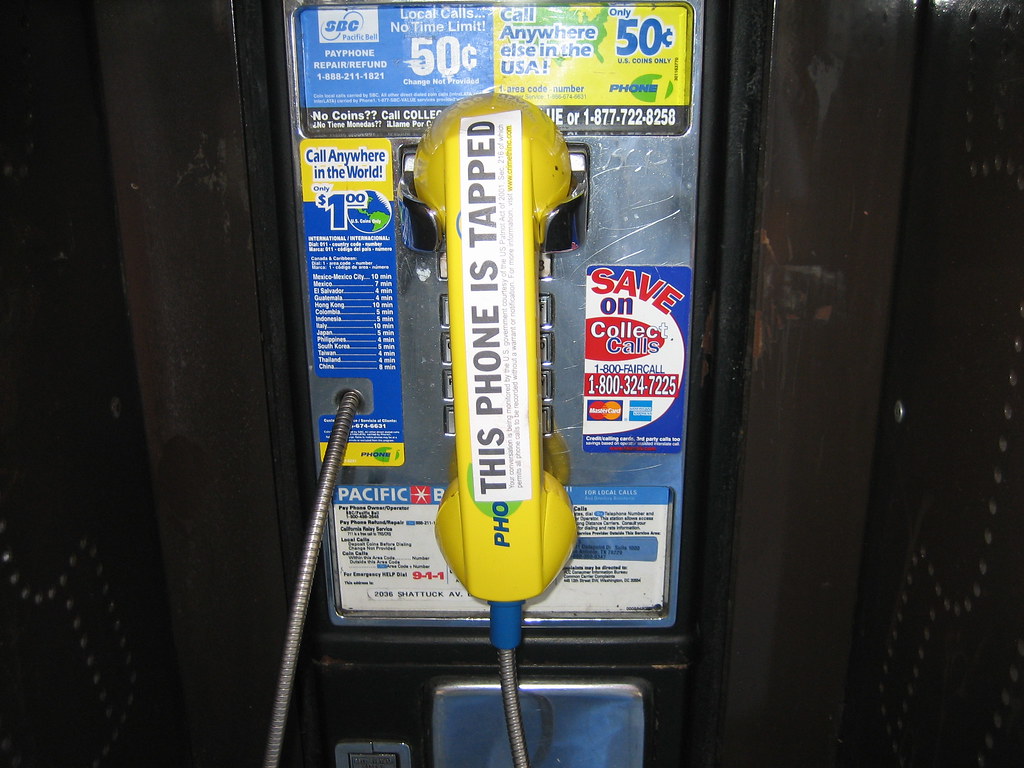
George Bush and Alberto Gonzales will likely never be made accountable for violating the FISA law. But the whistleblower who exposed their program - that's a different story:

[T]he raid was related to a Justice criminal probe into who leaked details of the warrantless eavesdropping program to the news media. The raid appears to be the first significant development in the probe since The New York Times reported in December 2005 that Bush had authorized the National Security Agency to eavesdrop on the international phone calls and e-mails of U.S. residents without court warrants. (At the time, Attorney General Alberto Gonzales said of the leak: "This is really hurting national security; this has really hurt our country.")


Don't expect many tearful editorials bemoaning the fate of the leaker if he is caught in this case. Those laments are saved for members of the dinner party set.

It's the sign of a completely corrupt government when we struggle to retroactively legalize official wrongdoing while the perpetrators have the gall to prosecute those who expose their actions. State secrets are meant to protect the nation, not its ruling class.


h/t John Cole

Sunday, June 24, 2007

Dick Cheney: the unitary (vice) executive ?

From the Washington Post:

Across the board, the vice president's office goes to unusual lengths to avoid transparency. Cheney declines to disclose the names or even the size of his staff, generally releases no public calendar and ordered the Secret Service to destroy his visitor logs. His general counsel has asserted that "the vice presidency is a unique office that is neither a part of the executive branch nor a part of the legislative branch," and is therefore exempt from rules governing either. Cheney is refusing to observe an executive order on the handling of national security secrets, and he proposed to abolish a federal office that insisted on auditing his compliance.

Cheney's obsession with personal privacy and security is legendary. After 9/11 it was the vice president who fled to an undisclosed location, vanishing from the public eye for most of the next 2 years. And while you can easily find high resolution satellite images of the White House, the Pentagon, military bases and nuclear reactors, the historic residence of the Vice President has been absurdly pixelated.

Cheney's refusal to follow the rules governing national secrecy (which exist to ensure those secrets aren't deliberately or accidentally released), show that he believes the president is his subordinate, not the other way around.

Friday, March 16, 2007

"There is going to be so much to hide"

In celebration of the House's recent action, passing 3 open-government bills, during "Sunshine Week"; I thought it would be interesting to see how things were being reported at the start of George Bush's attack on open records laws. Mere weeks after 9/11 the president used the specter of the terrorist threat to push through an executive order sealing presidential records and radically curtailing freedom of information requests. It's amazing to read this Washington Post article and realize that it foreshadowed so many of the scandals that would plague the president in the following 5 years:
Bush Clamping Down On Presidential Papers
Incumbent Could Lock Up Predecessor's Records

Thursday, November 1, 2001

The Bush White House has drafted an executive order that would usher in a new era of secrecy for presidential records and allow an incumbent president to withhold a former president's papers even if the former president wanted to make them public.

The five-page draft would also require members of the public seeking particular documents to show "at least a 'demonstrated, specific need' " for them before they would be considered for release.

Historians and others who have seen the proposed order called it unprecedented and said it would turn the 1978 Presidential Records Act on its head by allowing such materials to be kept secret "in perpetuity."
This may be the first record of the president signing an executive order for an unprecedented restriction on our rights. FOIA is inverted, the default position was that records would be open unless the government showed a specific need to classify them. Now classification is the default position.
Other critics voiced concern about the impact of the order "in the post-September 11 world," with its wartime atmosphere.

"The executive branch is moving heavily into the nether world of dirty tricks, very likely including directed assassinations overseas and other violations of American norms and the U.N. charter," said Vanderbilt University historian Hugh Graham. "There is going to be so much to hide."
Remember this is 2001: Americans still think that torture is a barbaric act done by evil people, habeas corpus is still a central element of our legal system, people who argue in defense of internment are considered racists, and Iraq is not on the minds of anyone other than the president and his cabinet.
Bush is expected to sign the order shortly. A White House aide said the Supreme Court held in 1977 that former presidents can continue to assert various privileges for their records and the order will simply establish "a procedure by which they can protect their rights." The aide said "great deference" will be paid to their wishes.
The government now works to protect the powerful. The presumption that our leaders are accountable to us is no longer in effect.
The proposed order, dated Oct. 29, grew out of a decision by the Bush administration early this year to block the release of 68,000 pages of confidential communications between President Ronald Reagan and his advisers that officials at the National Archives, including the Reagan library, had wanted to make public.
Proving that this law had nothing to do with national security, and that even the wishes of a Republican hero were unimportant. George Bush is the sole decider.
Relying on an obscure executive order that Reagan issued just before leaving office, White House counsel Alberto R. Gonzales prescribed a series of delays so that Bush could decide whether to invoke "a constitutionally based privilege or take other appropriate action."
Obscure executive orders, Alberto Gonzales devising delaying tactics, and the idea of presidential privilege all wrapped up in a single sentence.
The papers in question, some dealing with Reagan-era officials who now have high posts in the Bush administration, were to have been disclosed last January under the 1978 law, which said that the documents could be restricted at the most for 12 years after Reagan left office.
Hmmm, a conflict of interest here. Certainly, the president wouldn't pass such an act simply to avoid a little embarrassment. The man's at over 80% in the polls!
The new executive order would replace the 1989 Reagan decree and cover not only confidential communications between a president and his advisers but, as Graham put it, "almost anything in the White House files."
How did that "almost" get in there. Better call Alberto back.
For 12-year-old documents that are not covered by "constitutionally based privileges" but are subject to requests under the Freedom of Information Act, the order states that the archivist "must withhold" them if possible.
Must withhold anything despite the fact that FOIA declares these records are open and shall be made available to the public upon request - these are unclassified documents being discussed here.
For records that might be privileged as state secrets, confidential communications, attorney-client communications, or "deliberative process" materials, a requester must establish "specific need" for them "as a threshold matter."
There are the classified documents. I wonder if we could retroactively classify documents that are already public?
A former president would then review them and tell the archivist whether they should be withheld or made public. The incumbent president or a designee would then look at them to see if he or she agrees with the ex-president's decision. Unless both agree they should be made public, the records will remain secret unless "a final court order" should require disclosure.


Wednesday, March 14, 2007

President Bush attacks open records laws

E&P reports on the battle over government secrecy. The House overwhelmingly passed 3 bills which would open government records and protect whistleblowers from retribution. The Senate is following suit:
The measures, highlighting the media-led Sunshine Week, would force government to be more responsive to Freedom of Information Act requests, make contributions to presidential libraries public and overturn a 2001 presidential directive giving the president authority to keep his records from public view.

The White House issued a veto threat on the presidential records bill and voiced opposition to the FOIA legislation. It also said the president would veto a fourth bill the House is to debate later Wednesday on whistleblower protections. Democrats say the bills, several of which were also taken up in past Republican-led Congresses, were needed to shine light on what they say has been one of the most secretive administrations in decades.