Showing posts with label rule of law. Show all posts

Tuesday, November 4, 2008

Bob Barr's insurgent campaign costs John McCain two states


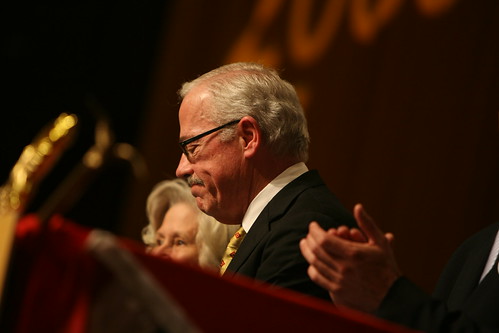
He didn't exactly cost John McCain the election, but if the current numbers hold, it looks like Bob Barr, the conservative Republican who famously broke from his party on the issues of the rule of law and torture, may have cost John McCain victories in North Carolina and Indiana.

    North Carolina with 98% of precincts reporting

  • Barack Obama(D) 2,098,401
  • John McCain(R) 2,084,344
  • Bob Barr(L) 25,031


  • Indiana with 98% of precincts reporting

  • Barack Obama(D) 1,330,959
  • John McCain(R) 1,315,916
  • Bob Barr(L) 28,692


Update: Too early to be sure, but Ron Paul may cost him Montana for the same reason.


Numbers via TPM at 12:30 Eastern time.
Image via Bob Barr for President under a Creative Commons license.

Tuesday, June 24, 2008

One of the worst decisions in history

It's strange that John McCain thinks that a world in which Osama bin Laden is tried by an American court would somehow be more dangerous than the actual world - where we just let him run free.

Thursday, May 1, 2008

The next president can't save us from Bush's power grab

Steve Clemons at The Washington Note suggests that anyone at an Q&A for McCain, Obama or Clinton should ask the following question:
Question One: Specifically, which powers of the Presidency that the Bush administration has acquired for itself would you roll back and give up?

That's a great question. Unfortunately, it falls into the same category as asking the son of a jewel thief which of his father's gems he'd give back. It implies that the decision is his, not the law's.

Tuesday, March 4, 2008

Just so long as I'm the dictator.

Robert Farley from LGM compares Obama's call for unity with those of W in 2000:
Bush is an outstanding example of a candidate whose centrist direction (at least in 2000; I think Bowers is right about 2004) had no noticeable impact on governing strategy.
Centrist direction?

Contrary to popular opinion, George Bush never ran as a moderate and anybody who bothered to listen to the man during the 2000 election knew that he wasn't a centrist. He was running as a compassionate conservative and if the term "compassionate" confused you, well he told you exactly what he meant by that, too. Here's how Myron Magnet explained it in the WSJ in 1999:
The poor need the larger society's moral support; they need to hear the message of personal responsibility and self-reliance, the optimistic assurance that if they try – as they must – they will make it. They need to know, too, that they can't blame "the system" for their own wrongdoing.
In short, poor people need a pep squad, not a handout. Quit complaining about racism or children being born into poverty. Re-stigmatize illegitimacy, shame unwed mothers, get tough on public school teachers and show the poor how irresponsible they're being by not getting off their lazy asses.

This definition of compassionate conservatism wasn't kept secret. It was repeated again and again during the run-up to the election. Where the government was going to be involved was in "faith based" initiatives - tearing down the wall between church and state.

And if that involved tearing up anti-discrimination laws? Well whatever works:
Some religious groups do, however, follow exclusionary policies, and these point up the inherent -- and constitutional -- difficulties of church-state partnerships. A week ago Friday, Governor Bush toured the Haven of Rest Ministries, a homeless shelter in Akron, Ohio. Two years ago, ministry officials told a Jewish businessman that he couldn't join the board, citing their rule of employing only born-again Christians.

During his visit, Mr. Bush maintained that under his plan Haven of Rest's programs would be eligible for Government funds -- even though groups that accept Federal money must comply with anti-discrimination laws.
The only reason this seemed "centrist" was because the Democrats felt the need to jump on the faith-based bandwagon themselves.
Bush and Gore have enthusiastically endorsed a provision of the 1996 welfare-reform bill called charitable choice, which allows faith-based organizations to administer welfare programs with public funds, as long as there are secular alternatives. And then there is the explosive issue of publicly financed vouchers for parochial and secular private schools, which all of the Republican candidates have embraced. Although Gore opposes vouchers, his Democratic opponent, Bill Bradley, provisionally supports them.
No, George Bush was all about "tax cuts so help me God!", eliminating the right of consumers to sue corporations, and deregulation of industry (back when Enron's Ken Lay was considered the smartest kid on the block).

His solution to environmental problems? Self-policing:
Although state regulators had been considering mandatory restrictions on polluters, state documents indicate that Mr. Bush thought the approach should be voluntary and essentially asked industry leaders to draft such a proposal, which they did in private meetings with state officials two years ago. No environmental groups or other public interest groups were invited, and they only learned about the meetings early this year.
His plan to get health care to the uninsured? Tax credits.
Under the plan he introduced here, Americans who have no health care coverage and are not poor enough to qualify for Medicaid could receive a tax credit of up to $1,000 an individual or $2,000 a family to cover 90 percent of the cost of insurance.
Good luck paying for insurance with that. Especially if you're one of those lazy welfare queens.

As for his views on civil liberties, "there ought to be limits to freedom" was provoked by a web site making fun of his campaign. Bush's campaign threatened legal action.

And if we hadn't been so busy chuckling that Bush failed a reporter's pop quiz, we might have worried that the one person he did recognize had just overthrown a democratically elected Prime Minister - and George Bush approved wholeheartedly.
Mr. Bush also offered an assessment of the situation in Pakistan, where Gen. Pervez Musharraf seized power in a coup d'etat last month.

Mr. Bush, failing to name the general, said, "It appears this guy is going to bring stability to the country, and I think that's good news for the subcontinent."
So you can fault George Bush for a lot of things, but lying about his goals as president isn't one of them. He told us of his plans to privatize Social Security, to nominate Scalia type justices, to gut social services, to increase military spending and tear up pesky treaties. He was running on unity, not compromise. He intended to get Democrats to agree to his plans, not to find common ground. (And he has been quite successful getting them to sign on to every harebrained idea he had).

Hell, if you believed what the man was telling you at the time, you'd have gotten a pretty good preview of the next 8 years. He even dropped hints about the second Gulf war.
At the Republican debate here on Thursday and at a news conference in nearby Bedford this morning, George W. Bush said that if he was commander in chief, any discovery that Iraq's president, Saddam Hussein, was building weapons of mass destruction would touch off a swift and punishing response.

Mr. Bush seemed to say he would "take him out," indicating that he would forcibly remove Mr. Hussein from power or worse. But Mr. Bush said in a telephone interview this afternoon that the phrase, easily misinterpreted because of his Texas drawl, was "take 'em out," meaning the weapons.
As for his idea of bipartisanship, his most famous quote:
"If this were a dictatorship, it'd be a heck of a lot easier, just so long as I'm the dictator."
...He said that to a bipartisan group of Congressional leaders, one month before taking the oath of office.
Thursday, February 28, 2008

If the president tells you to do it, that means it is not illegal


Or at least, that's the thinking of George Bush (channeling the ghost of Richard Nixon).
The government said to those who have alleged to have helped us that it is in our national interests and it’s legal. It’s in our national interests because we want to know who’s calling who from overseas into America. We need to know in order to protect the people.

It was legal.

Of course, they could have simply had their attorneys do a quick check of the law to see that it was illegal.

So on the one hand the civil liberties of our citizens are guaranteed by a lot of checks in the system, scrutinized by the United States Congress.

Right. Those checks are called laws. Like the FISA law. The one you violated. And you didn't bother informing Congress until you were worried they wouldn't rubber stamp your retroactive immunity bill.

As for whether the phone companies will help you monitor terrorist's phone calls -- Well, you could always get a warrant.

Image credit: Bell System Telephone by seychelles88

Tuesday, December 18, 2007

Chris Dodd: man of the hour


The 4th amendment. Image originally uploaded by wemeantdemocracy.

At least one of the Democrats running for president remembers that he already has a platform to fight back against President Bush's power grab.
Sen. Christopher J. Dodd (D-Conn.) -- a presidential candidate who returned from Iowa Sunday night to fight the measure -- quickly claimed victory after the bill's withdrawal, and he again vowed to "utilize all the tools available" to block passage once Reid calls it up in January.
Reid, unfortunately, has done all he could to undermine his fellow Democrat and Dodd got little support from his colleagues. Only 10 Senators joined him in voting against moving the FISA bill forward. 35 of his fellow Democrats voted against him (those who think we simply need more Democrats in the Senate should keep that in mind).

Dodd took a significant risk against long odds in what has been one of the few victories against George Bush's assault on the rule of law.
Dodd has been an outspoken opponent of any measure that would offer retroactive immunity to telecom companies that participated with the Bush Administration in violating the civil liberties of millions of American. He announced in October he would put a hold on any bill that included retroactive immunity language. Although his hold was disregarded, he has remained a strong opponent to the bill. Dodd was prepared to offer an amendment that would strip the retroactive immunity provision of the bill and announced he would filibuster the bill if his amendment failed.
I consider it very strange that none of the other Democratic Senators running for president have taken advantage of their positions to prove their ability to lead on controversial issues. Bush's claims of presidential power cannot be defeated by the next president from within the White House. If Congress continues to capitulate to his whims, they no longer are a co-equal branch of government.

Friday, October 19, 2007

Legitimacy

Scott Lemieux at Tapped makes a common error while calling for the Senate to reject Michael Mukasey's nomination for Attorney General:

It's true that the Senate vote is virtually all about symbolism at this point -- someone has to serve in the office, and nobody Bush appoints is going to be good -- but in this case the symbolism matters.

Confirming a nominee is about much more than just filling an open position. Confirmation implies legitimacy. This reverberates throughout the entire Justice department. The lawyers he hires, the interpretation of the law he pursues even the cases he prosecutes are affected by his standing with the people.

There's nothing symbolic about demanding that a nominee believe in the rule of law and emphatically renounce torture. Alberto Gonzales would never have been confirmed in the first place if the Senate had demanded those simple standards. Instead, 6 Democrats voted along with 54 Republicans to give him a Congressional seal of approval.

Gonzales was able to run roughshod over Justice because he was confirmed by a Senate that knew he condoned torture and believed in a unitary executive. He was forced out when he lost the faith of those same Senators

A recess appointee would never have had the clout to act so egregiously.

Precedents matter in this country. Regardless of whether George Bush ever nominates a qualified AG, future presidents should be on notice that they can't simply nominate anybody to the highest offices in government.

Chris Dodd draws a line in the sand

image courtesy of the National Archives

Amendment IV

The right of the people to be secure in their persons, houses, papers, and effects, against unreasonable searches and seizures, shall not be violated, and no warrants shall issue, but upon probable cause, supported by oath or affirmation, and particularly describing the place to be searched, and the persons or things to be seized.


(Below are Chrid Dodd's statements against granting immunity to telecom companies who abetted George Bush's warrentless surveillance of U.S. citizens in violation of the FISA law)
By granting immunity to telecommunications companies that participated in the President’s terrorist surveillance program, even though such participation may have been illegal, the FISA reform bill sets a dangerous precedent by giving the President sweeping authorization to neglect the right to privacy that Americans are entitled to under the Constitution.

“The President has no right to secretly eavesdrop on the conversations and activities of law abiding American citizens and anyone who has aided and abetted him in these illegal activities should be held accountable,” said Dodd. “It is unconscionable that such a basic right has been violated, and that the President is the perpetrator. I will do everything in my power to stop Congress from shielding this President’s agenda of secrecy, deception, and blatant unlawfulness.”

"While the President may think that it's right to offer immunity to those who break the law and violate the right to privacy of thousands of law-abiding Americans, I want to assure him it is not a value we have in common and I hope the same can be said of my fellow Democrats in the Senate.

"For too long we have failed to respect the rule of law and failed to protect our fundamental civil liberties. I will do what I can to see to it that no telecommunications giant that was complicit in this Administration's assault on the Constitution is given a get-out-of-jail-free card."

Update: Washington Post reporter, Rita Skeeter, worries that Dodd will lose precious campaign time by doing his job:
Whenever that big day comes, Dodd -- as the keeper of the "hold" -- must return from the campaign trail to officially block debate on the bill. That entails standing around on the Senate floor, forcing procedural votes, avoiding the furious glares of colleagues who don't share the same concerns. The standard duration of such showdowns is about a week -- time that Dodd, who is trailing badly in early primary polls, can scarcely afford.

Tuesday, August 14, 2007

Southern Justice: Tennessee frees a convicted killer

67 days for murder?

The woman convicted of manslaughter in the shotgun slaying of her minister husband was freed Tuesday after serving 67 days in custody.


I thought only ACLU loving, Northeastern states were this soft on confessed killers.

She even remembered holding the shotgun later that morning. But she insisted she had no recollection of what happened thereafter, until she saw her dying husband lying on the floor in a pool of blood.

Her testimony contrasted sharply with the prosecution's portrayal of Mary as a calculated killer who shot her husband after he confronted her with a check-kiting scheme she had become involved in. Matthew, according to the prosecution, was a loving husband, caring father and beloved minister.

Because there was no dispute that Mary shot Matthew, the jury was faced with deciding first whether it believed Mary and, if so, whether the physical, verbal and sexual abuse excused her husband's murder.

Tuesday, July 24, 2007

Guantanamo judge scolds detainee for dressing badly

Another excerpt from the kangaroo court.

Apparently, the judge was unimpressed that a man who had been held without charge and without access to the outside world for 5 years arrived at the hearing in his prison uniform:

GUANTANAMO Bay detainee David Hicks fronted a US military commission hearing earlier this year in a shapeless prison shirt and baggy trousers, his hair long and unkempt.

His style did not impress the presiding judge, US Marine Colonel Ralph Kohlmann.

Colonel Kohlmann indicated that Hicks, who stood accused of supporting terrorism and attempted murder, would be better off in a suit and tie, or casual smart attire. It matters what you wear to a terrorism trial, apparently.

Sunday, July 22, 2007

Russ Feingold renews call for censure of George Bush

In March of 2006, following the discovery that the President was covertly spying on Americans, Russ Feingold (D -Wisconsin) called for the Congress to censure the President for acting in violation of the FISA law.

At the time, the Republicans controlling Congress blocked all oversight of the president. Their idea of a solution was to retroactively legalize the program. The minority Democrats meanwhile, fearful of losing votes by challenging a president whose approval ratings were in the mid 30's, tried to pretend Russ Feingold didn't exist.

Today, Senator Feingold has renewed his call for censure, citing mismanagement of the Iraq war and the assault on the rule of law.

U.S. Senator Russ Feingold announced today that he will introduce two censure resolutions condemning the President, Vice President and other administration officials for misconduct relating to the war in Iraq and for their repeated assaults on the rule of law. Feingold called the resolutions appropriate and necessary steps for Congress to rebuke an administration that is responsible for some of the worst misconduct and the worst abuses of the law in American history.


The first resolution will condemn the President and others for misconduct relating to the war in Iraq
including:

* Overstating the case that Saddam Hussein had WMD, particularly nuclear weapons, and falsely implying a relationship with al Qaeda and links to 9/11.

* Failing to plan for the civil conflict and humanitarian problems that the intelligence community predicted.

* Over-stretching the Army, Marine Corps and Guard with prolonged deployments.

* Justifying our military involvement in Iraq by repeatedly distorting the situation on the ground there.


The second resolution will focus on the administration’s attack on the rule of law
with respect to, among other things:

* The illegal NSA warrantless wiretapping program.

* Extreme policies on torture, the Geneva Conventions, and detainees at Guantanamo.

* The refusal to recognize legitimate congressional oversight into the improper firings of U.S. Attorneys.

Wednesday, July 18, 2007

Tom Coburn asks: "Why can't we just shoot people?"

A "Culture of Life" Republican Senator proves that being a devout Christian doesn't guarantee you have a solid sense of morality:

Tom Coburn, R-OK: "Why is it wrong for a Border Patrol agent who has stopped a van full of drugs, and the guy's running, why is it wrong to shoot him after they've told him to stop?"

U.S. Attorney Sutton: "Under the Constitution, if somebody's not causing you fear, you can't just shoot 'em because you're trying to stop 'em, or you're angry at 'em or you want to teach them a lesson,"


Coburn: "If in fact the message was: 'You come here with drugs, we interdict you and you don't stop, we're going to wing you, we're going to shoot you' – that message itself would do a lot to stop a lot of this."


Sutton: "If we let our agents just open fire, shooting to kill ... some innocent person is going to get gunned down execution-style by a cop, and there's going to be an outcry,"


h/t DSADevil

Monday, July 2, 2007

The most insidious of traitors

Matt Yglesias thinks Bush took the honorable path in freeing Scooter Libby.

I didn't think he would do it, but it's really the only honorable course of action available to him. It would be silly for Bush to pretend to believe that people deserve to be punished for breaking the law to help cover up his administration's crimes when he clearly believes no such thing.

But, there are those who get absolved for doing Bush's dirty work, and there are those who don't:

Eleven U.S. soldiers _ all from the enlisted ranks _ have been convicted in the Abu Ghraib prison scandal, with former Cpl. Charles A. Graner Jr. receiving the harshest sentence, a 10-year prison term.

Friday, June 29, 2007

Supreme Court Justices attack the Sherman Antitrust Act

In the final day of the current session, the Supreme Court overturned a portion of the Antitrust Act, allowing businesses to join together to fix prices.
WASHINGTON, June 28 — Striking down an antitrust rule nearly a century old, the Supreme Court ruled on Thursday that it was not automatically unlawful for manufacturers and distributors to agree on minimum retail prices.

The decision will give producers significantly more, though not unlimited, power to dictate retail prices and to restrict the flexibility of discounters.

Five justices, agreeing with the nation’s major manufacturers, said the new rule could in some instances lead to more competition and better service. But four dissenting justices agreed with 37 states and some consumer groups that abandoning the old rule could result in significantly higher prices and less competition for consumer and other goods.

The court struck down the 96-year-old rule that resale price maintenance agreements were an automatic, or per se, violation of the Sherman Antitrust Act. In its place, the court instructed judges considering such agreements for possible antitrust violations to apply a case-by-case approach, known as a “rule of reason,” to assess their impact on competition. The new rule is considerably more favorable to defendants.

The decision was handed down on the last day of the court’s term, which has been notable for overturning precedents and for victories for big businesses and antitrust defendants.

No points for guessing which five justices voted in favor of big business.

Monday, June 18, 2007

A general is fired for his actions at Abu Ghraib

Unfortunately, it's the man who uncovered the abuse.
“From the moment a soldier enlists, we inculcate loyalty, duty, honor, integrity, and selfless service,” Taguba said. “And yet when we get to the senior-officer level we forget those values. I know that my peers in the Army will be mad at me for speaking out, but the fact is that we violated the laws of land warfare in Abu Ghraib. We violated the tenets of the Geneva Convention. We violated our own principles and we violated the core of our military values. The stress of combat is not an excuse, and I believe, even today, that those civilian and military leaders responsible should be held accountable.” - General Taguba, fired for exposing the torture at Abu Ghraib.

Taguba is just one of the many professionals fired by this administration for believing his loyalty lies with the country and it's ideals, not with the President. His fault lay in thinking that honor and integrity are words with meaning.

[The background materials from Gen. Taguba's investigation], including high-level policy memos, special investigations and witness testimony, describe attacks, prisoner riots, interrogation methods and the torture and deaths of detainees. They reveal that the torture and abuse of inmates at the prison by military police, exposed in April 2004 news accounts of the classified report, took place under the guidance of military intelligence with little direct supervision from overburdened senior officers.

Let's hope that, by the time George Bush leaves office, our military still has a few officers of his caliber.

Friday, June 15, 2007

Republican moderates calling for a return to the rule of law

Pete Abel over at Central Sanity drafts a letter to prospective Republican candidates and their leaders. Here's an excerpt:
We believe in the U.S. Constitution, its checks and balances, and importantly, the protections it affords our states and citizens. We further believe those protections should be consistently applied, both in times of war and of peace. The war on terror should not be a war on habeas corpus.
That paragraph certainly would've been a minimum standard for any American politician prior to 2001.

Unfortunately, now we've got people like this:
"I am a strong supporter of the First Amendment, the Fourth Amendment and civil liberties. But you have no civil liberties if you are dead." (Senator Pat Roberts, former Senate Intelligence Committee Chairman)
and this:
"Civil libertarians are in a state of denial." (Judge Richard Posner, author of Not a Suicide Pact: The Constitution in a Time of National Emergency)
And of course this:
"Freedom is about authority. Freedom is about the willingness of every single human being to cede to lawful authority a great deal of discretion about what you do." (Rudy Giuliani, frontrunning candidate for the Republican presidential nomination)

Update: I'd almost forgotten about this one:
“There is no express grant of habeas in the Constitution.” (Attorney General Alberto Gonzales)
and this one:
"There ought to be limits to freedom" (Governor George Bush)
Really, you could keep this up all day

h/t GreenDreams

Saturday, June 9, 2007

The Republican war

Fouad Ajami in the WSJ:
Mr. President, the one defining mark of your own moral outlook is the distinction between friend and foe, a refusal to be lulled into moral and political compromises. Your critics have made much of this and have seen it as self-righteousness and moral absolutism, but this has guided you through the great, divisive issues faced by our country over these last, searing years. Scooter Libby was a soldier in your--our--war in Iraq, he was chief of staff to a vice president who had become a lightning rod to the war's critics.
Keep in mind, the foe in this case was a covert CIA agent working for the United States to prevent the nation's enemies from obtaining nuclear, chemical and biological weapons.

The friend was a partisan hit man.

In Ajami's mind the enemy isn't bin Laden or Saddam. It's the CIA the State Department, and the Democrats.
In "The Soldier's Creed," there is a particularly compelling principle: "I will never leave a fallen comrade." .... They have done it, we know, to give heart to those who embark on a common mission, to give them confidence that they will not be given up under duress.
Libby betrayed his oath to defend the country when it conflicted with his loyalty to the president. He sacrificed a real soldier to do it.

Tuesday, May 15, 2007

5 out of 7 Republican candidates asked, endorse torture

In the recent FOX news presidential debate, Brit Hume created a fictional scenario straight from the pages of 24, a classic "ticking time bomb" plot: American shopping centers are hit by suicide bombers, hundreds dead. Other attackers captured and taken to Gitmo. Will you use enhanced interrogation techniques to prevent a second attack?

(Brit assures us that the best minds in the intelligence industry think these are the most valuable tools available - if not necessarily legal)

Only John McCain and Ron Paul were willing to call this for what it is. It's torture. McCain rejected it explicitly, while Ron Paul made an exception for the fantasy scenario.
McCAIN:We do not torture people.

It's not about the terrorists, it's about us. It's about what kind of country we are. And a fact: The more physical pain you inflict on someone, the more they're going to tell you what they think you want to know.
Rudy Giuliani, the man who survived 9/11, disagrees. He doesn't want to see another 3000 dead.
GIULIANI: I would tell the people who had to do the interrogation to use every method they could think of. It shouldn't be torture, but every method they can think of --
Of course, anything that doesn't cause organ failure is no longer considered torture. Giuliani gives waterboarding the thumbs up.

Romney isn't so coy. In fact he's nearly giddy at the idea. Apparently worried that the ACLU will try to spring bin Laden's boys, he puts them safely in an expanded Guantanamo, far from prying eyes.
ROMNEY: I want them on Guantanamo, where they don't get the access to lawyers they get when they're on our soil. I don't want them in our prisons. I want them there.

Some people have said, we ought to close Guantanamo. My view is, we ought to double Guantanamo... And enhanced interrogation techniques have to be used -- not torture but enhanced interrogation techniques, yes.
Senator Brownback assures us that he won't let the U.N. get in the way of American safety and he'll worry about the morality of his decision after the crisis is over.
BROWNBACK: I will do it. I'll move aggressively forward on it. If we have to later ask and say, "Well, it shouldn't quite have been done this way or that way," that's the way it is.
Hunter and Tancredo, apparently worried that Mitt is stealing the John Wayne vote, decide not to mince words.
HUNTER: I would say to SECDEF, in terms of getting information that would save American lives, even if it involves very high-pressure techniques, one sentence: Get the information. Have it back within an hour, and let's act on it.

TANCREDO: Well, let me just say that it's almost unbelievable to listen to this in a way. We're talking about it in such a theoretical fashion. You say that nuclear devices have gone off in the United States, more are planned, and we're wondering about whether waterboarding would be a -- a bad thing to do? I'm looking for "Jack Bauer" at that time, let me tell you. (Laughter, applause.)
Hume didn't actually mention nukes, and of course the question was theoretical, but Tancredo seems to know who's network he's on.

Unfortunately, it's left to Paul to point out the obvious. Brit Hume is asking questions in a fantasy world, while a real war rages on.
PAUL: [Y]ou know, I think it's interesting talking about torture here in that it's become enhanced interrogation technique. It sounds like Newspeak.

Nobody's for the torture, and I think that's important. But as far as taking care of a problem like this, ... If we're under imminent attack, the president can take that upon himself to do it.

[W]e forgot about [Osama], and now we're over in Iraq in a war that's bogging us down, and we have forgotten about dealing with the people that attacked us. And here you have a hypothetical attack that you're dealing with; we ought to be dealing with the one we have right now on our hands.

From the Kangaroo Court: if at first you don't succeed...

From the court that brought you a plea bargain so secret, the prosecutors didn't even know about it, comes an even more ingenious legal theory. If a tribunal accidentally finds the accused not guilty, just try again.
If Pentagon officials disagree with the result of a hearing, they order a second one, or even a third, until they approve of the finding.

Detainees’ lawyers say the issue of the repeated hearings offers the starkest proof that the Pentagon set up a system of military tribunals not to find the truth about the detainees but to ratify its own conclusion that the military had seized the right people.

Another aspect to the case in the appeals court that has caused public debate involves the government’s request that the court tighten restrictions on lawyers for the detainees. One proposal would have limited the number of visits the lawyers could make to Guantánamo, a request that the Justice Department withdrew Friday.

As set up by the Pentagon, the tribunals do not permit detainees to have lawyers at the hearings or to see much of the evidence against them.
Oddly, Paul Wolfowitz, famous for helping to plan the Iraq war and for the current World Bank scandal, was involved in this decision too.

h/t ThinkProgress

Monday, May 14, 2007

Turkish voters will elect their president directly

Under threat of a coup, the Turkish parliament has overwhelmingly decided to have the voters choose their president:
Turkish presidents, traditionally, are elected in parliament -- but parliament has just voted to give that decision to the people. Behind the reform is an old conflict between Muslims and Turkish secularists.
The current prime minister Erdogan, and his chosen nominee for president, Gül, are members of a conservative Islamic party (AKP). The military, who see themselves as defenders of the secular nation, had threatened a coup if Gül were elected by parliament.

Interestingly, it's Erdogan and Gül who believe they'll win in a direct election. The current president may veto the law to prevent it.
[The current president] Sezer is among critics ... who say the law was rushed through without enough debate. He's hinted at a veto. It's true that the Islamic-rooted, center-right AKP promoted the amendment after its presidential candidate, Abdullah Gül, lost two divisive votes in parliament.
[Gül actually won the votes of more than 60% of the members of parliament, but opponents prevented a quorum by boycotting the proceedings]
The president in Turkey controls the military, and Gül's candidacy last month tore open old wounds between conservative Muslims in the AKP on the one hand, and secularists on the other -- especially secularists entrenched in the military. The army has issued a veiled threat to the government that it may stage a coup if a candidate with Islamist roots -- such as Gül -- is elected president.
In Turkey, it's the AKP that leans towards the West. Erdogan has aggressively pursued EU membership, while secular parties have been more nationalistic.

There's no evidence that the military would not stage a coup against a popularly elected President. Protesters came out in force against the AKP yesterday, but oppose military threats as well.
Veiled threats from generals during Gül's presidential bid inflamed national tensions, and protesters in Izmir carried not just anti-Erdogan banners but also paper hats with slogans: "No to Islamic law, no to military coups: a democratic Turkey."